
 EN /
CN
EN /
CN
search the product
Search for what you are looking for here:
- Popular:EMF-SX-SOxygen AnalyzerUniMass-S
EN /
CN
Search for what you are looking for here:

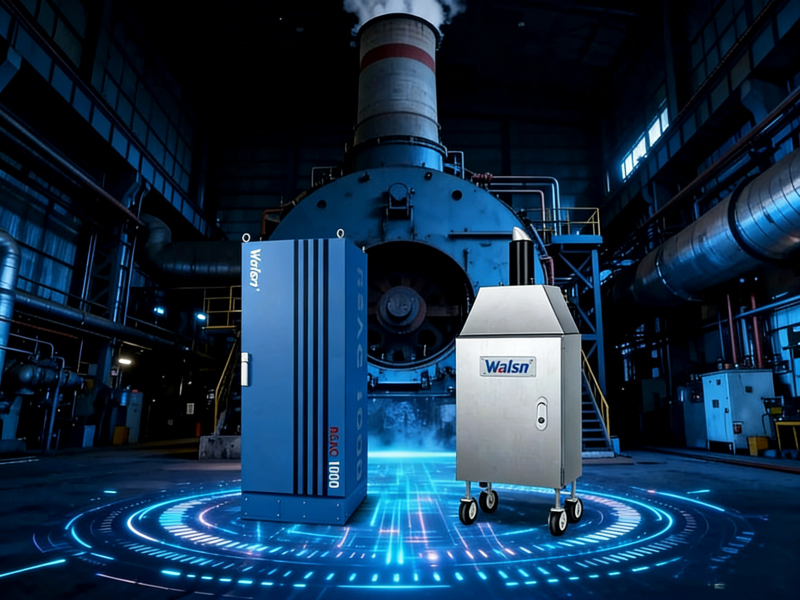
Real-time online coal quality detection system addresses critical gap in combustion-side monitoring, transforming power plants from experience-based to data-driven operations
As coal-fired power plants strive to meet net-zero emission targets and adapt to new power system requirements, a critical challenge has emerged: while steam-water side parameters like temperature, pressure, and flow are well-monitored, the combustion side—particularly fuel quality—has remained a blind spot. This gap has hindered efforts to achieve balanced combustion and intelligent automatic control.
Walsn Energy has developed a breakthrough solution that addresses this long-standing industry problem. Using laser Raman spectroscopy analysis technology, the company's online coal quality detection system provides real-time measurement of key coal parameters including volatile matter, ash content, moisture, and calorific value—transforming how power plants operate.
The Problem: Coal Quality Fluctuations Create Operational Chaos
Volatility in the coal supply market means that the quality of coal entering furnaces changes frequently, creating significant safety and operational challenges. When coal quality fluctuates:
-Boiler combustion becomes unstable
-Main steam temperature and pressure swing
-Carbon content in fly ash increases
-Severe cases may lead to furnace flameouts and equipment wear
Traditionally, coal quality measurement relied entirely on manual sampling and laboratory analysis—a process that takes hours. By the time results arrive, operators can only respond reactively based on experience, with low accuracy and poor real-time performance. This approach seriously impacts the safe, economical, and environmentally friendly operation of boilers, creating major obstacles for efficient plant management.
The Solution: Molecular-Level Detection Technology
Walsn Energy's system represents a fundamental shift from traditional laboratory analysis to molecular-level detection. The technology uses laser Raman spectroscopy to identify molecular structures, analyzing first-order and second-order Raman spectra of coal by calculating peak positions, widths, and intensities. By correlating chemical structures—including coupled aromatic rings, C=O, and C-H bonds—with coal quality parameters, the system measures moisture, ash content, volatile matter, calorific value, and sulfur content in real time.
Core advantages of the system:
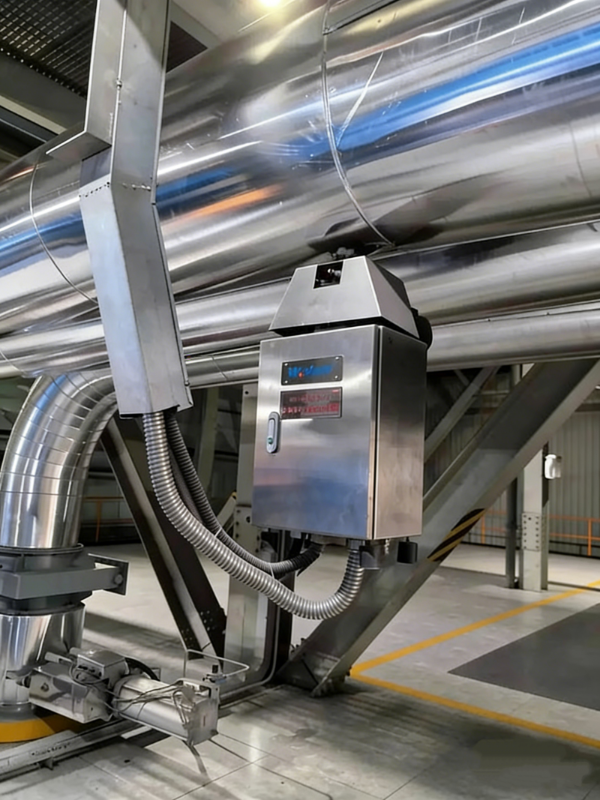
Two main components: Constant-temperature control unit (operates reliably at -20°C to 65°C, no dedicated operation room needed) and Raman probe (with dedicated closed in-situ sampling device)
-Efficient sampling: Closed in-situ sampling at primary air-pulverized coal pipeline, with blowback of unused coal powder to minimize waste
-Durable design: Sampling device adopts wear-resistant ceramic materials
-Multichannel monitoring: Can simultaneously monitor up to six pulverized coal pipes
-Rapid analysis: Completes a coal quality measurement in under five minutes
-Seamless integration: Data transmits directly to plant's DCS system via RS-485 interface or analog current signals, supporting 24/7 continuous operation
Full-Scenario Intelligent Applications: From Data to Value
The system delivers tangible benefits across three critical operational areas:
1. Optimizing BTU Parameters for Better Load Response
By using real-time British Thermal Unit (BTU) parameters as the core of coordination control optimization, combined with current load demand and operating conditions, the system provides precise fuel supply control during load changes. Key benefits:
-Significantly more stable steam temperature and pressure
-Faster response to load changes
-Improved performance under demanding conditions like deep peak shaving
2. Pulverizer Optimization: Saving Energy While Reducing Risk
Real-time volatile matter data enables dynamic adjustment of pulverizer operating parameters:
-For high-volatile coal: Automatically increases pulverized coal velocity and fineness setpoints, reduces pulverizer outlet temperature—lowering fire and burner damage risks
-For low-volatile coal: Optimizes primary air velocity and pulverized coal fineness combinations, reducing power consumption while maintaining acceptable combustible matter levels in ash and slag
3. Coal Blending and AGC Coordination: Maximizing Fuel Value
Key value points of real-time blended coal quality monitoring and Automatic Generation Control (AGC) integration:
-Ensures calorific value and sulfur content meet expectations, avoiding combustion instability from poor blending
-Optimizes primary air flow setpoints when integrated with the AGC system, improving coordination between pulverizing systems and automatic generation control
-Increases automatic control accuracy and reduces manual intervention
Industry Validation: Technology That Works
As a member of the Walsn Group, Walsn Energy holds multiple patents and copyrights for this technology. The online coal quality detection system has been successfully implemented across multiple coal-fired power units.
Industry recognition highlights:
-Deep integration capability with pulverizing systems and Integration with the AGC system
-Adaptability to multi-scenario operating conditions
-Stable operation, becoming a preferred solution for intelligent combustion-side retrofitting projects globally
Looking Ahead: Supporting the New Power System
Walsn Energy has made the digitalization and intelligence of power plant boilers its corporate mission, focusing on industry needs and continuous innovation. The company provides full lifecycle services:
-Solution design
-Equipment R&D and manufacturing
-On-site commissioning
-After-sales support
By breaking through the combustion-side monitoring bottleneck with advanced technology, Walsn Energy's solution provides the technical foundation for boiler intelligent upgrades, enabling power plants to operate more safely, efficiently, and environmentally—delivering long-term value in an era of increasing operational complexity and environmental requirements.
The transition from "experience-based adjustment" to "data-driven operation" represents a fundamental shift in how power plants manage combustion optimization, and Walsn Energy's technology is leading this transformation.